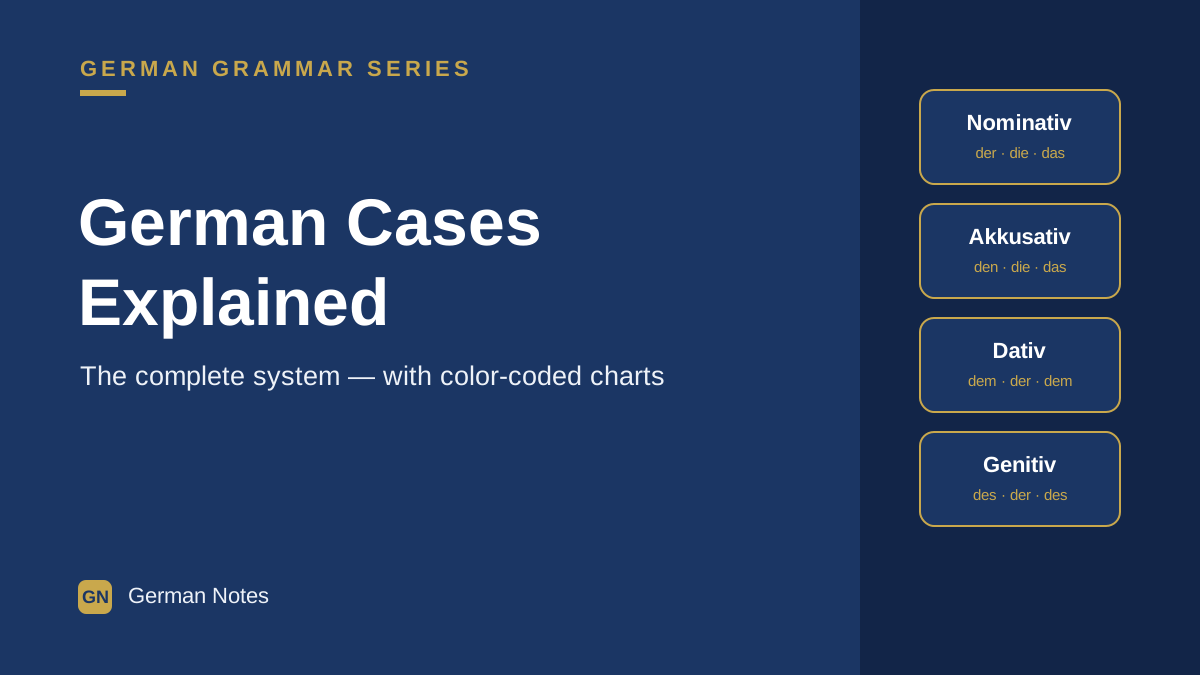
German cases are grammatical categories that change how words function in a sentence. In English, we use word order to show who does what. In German, we use cases.
The Four German Cases
- Nominative (Nominativ) — The subject
- Accusative (Akkusativ) — The direct object
- Dative (Dativ) — The indirect object
- Genitive (Genitiv) — Possession/belonging
Why Cases Matter
English: "The dog bites the man" — we know who bites whom because of word order.
German: "Der Hund beißt den Mann" — we know who bites whom because of cases (der = nominative, den = accusative).
The word order could change, but the cases tell us the meaning: "Den Mann beißt der Hund" still means "The dog bites the man."
Quick Reference: How Cases Change Words
Article changes by case:
| Case | Masculine | Feminine | Neuter | Plural |
|---|---|---|---|---|
| Nominative | der | die | das | die |
| Accusative | den | die | das | die |
| Dative | dem | der | dem | den |
| Genitive | des | der | des | der |
Example with "Stuhl" (chair, masculine):
- Nominative: der Stuhl (the chair — subject)
- Accusative: den Stuhl (the chair — direct object)
- Dative: dem Stuhl (the chair — indirect object)
- Genitive: des Stuhls (of the chair — possession)
The Four Cases Explained Simply
Nominative (Subject)
What: The person/thing doing the action
Question: "Wer?" (Who?) or "Was?" (What?)
Article: der, die, das, die
Example: Der Mann liest ein Buch. (The man reads a book.)
"Wer liest?" → Der Mann (Who reads? The man) = Nominative
Accusative (Direct Object)
What: The person/thing receiving the action directly
Question: "Wen?" (Whom?) or "Was?" (What?)
Article: den, die, das, die (only masculine changes)
Example: Der Mann liest ein Buch. (The man reads a book.)
"Was liest er?" → Ein Buch (What does he read? A book) = Accusative
Note: "Buch" is neuter, so the article doesn't change (das → das).
Dative (Indirect Object)
What: The person/thing receiving the action indirectly
Question: "Wem?" (To whom?)
Article: dem, der, dem, den
Example: Ich gebe dem Mann ein Buch. (I give the man a book.)
"Wem gebe ich es?" → Dem Mann (To whom do I give it? The man) = Dative
Genitive (Possession)
What: Shows possession or belonging ("of")
Question: "Wessen?" (Whose?)
Article: des, der, des, der
Example: Das Buch des Mannes ist interessant. (The man's book is interesting.)
"Wessen Buch?" → Des Mannes (Whose book? The man's) = Genitive
Case Chart: At a Glance
| Aspect | Nominative | Accusative | Dative | Genitive |
|---|---|---|---|---|
| Function | Subject | Direct object | Indirect object | Possession |
| Question | Wer/Was? | Wen/Was? | Wem? | Wessen? |
| Masculine | der | den | dem | des |
| Feminine | die | die | der | der |
| Neuter | das | das | dem | des |
| Plural | die | die | den | der |
| Example | Der Mann | den Mann | dem Mann | des Mannes |
Why This Order?
Most common to least common:
- Nominative — Every sentence needs a subject
- Accusative — Most verbs have direct objects
- Dative — Fewer verbs use dative, but still very common
- Genitive — Least common in spoken German (more formal/written)
Common Mistakes with Cases
Mistake 1: Forgetting Masculine Articles Change
Wrong: Der Mann sieht der Mann.
Right: Der Mann sieht den Mann.
Only masculine nominative → accusative changes the article. (The man sees the man.)
Mistake 2: Confusing Dative and Accusative
Wrong: Ich gebe das Buch den Mann.
Right: Ich gebe das Buch dem Mann.
Give TO someone = dative (wem?)
Mistake 3: Not Changing Nouns in Genitive
Wrong: Das Buch der Mann.
Right: Das Buch des Mannes.
Masculine nouns add "-s" or "-es" in genitive.
Mistake 4: Misidentifying the Object
Wrong: Ich helfe den Mann. (dative required, accusative used)
Right: Ich helfe dem Mann. (I help the man)
"Helfen" (to help) takes a dative object, not accusative.
FAQ
Do I need to memorize all the cases?
Not memorize — internalize. You'll see them repeated so many times that they become automatic.
Is English different?
Yes. English lost most cases (we only have some pronouns: I/me, he/him). German kept them all.
Which case is hardest?
Genitive. But it's also the least used in spoken German.
Can I skip cases?
No. Cases are fundamental to German grammar — you can't progress without understanding them.
Your Learning Path
- Read this overview (you are here)
- Study each case individually with our A1 grammar lessons
- Practice recognizing cases with our grammar exercises
- Build vocabulary alongside grammar with Lernwortschatz flashcards
- Use cases in real sentences — active practice with a teacher, not just charts
Not sure where your German currently stands? Take our free placement test — it takes about 20 minutes and tells you which level to start from. Ready to build cases into real fluency with a teacher and live practice? Enroll in a live batch that fits your schedule.