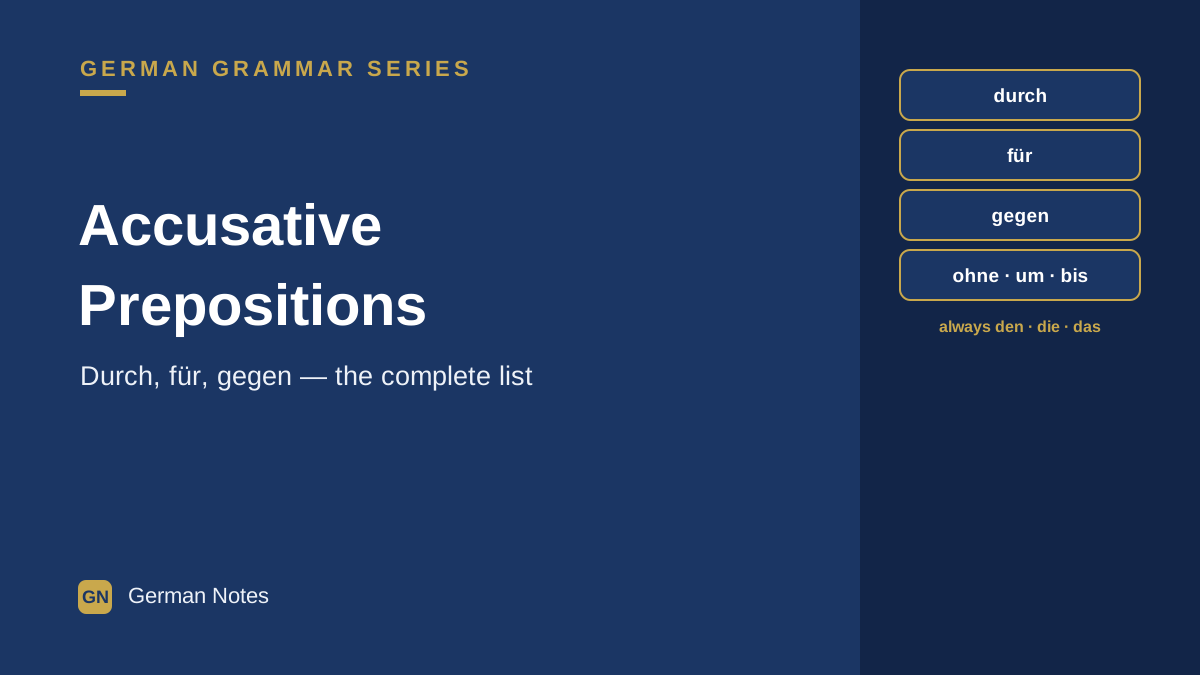
Accusative prepositions always take accusative case — no exceptions, no dative option. Once you've learned the accusative case itself, these eight prepositions are pure memorization: see the word, use accusative, done.
Complete List of Accusative Prepositions
| Preposition | Meaning | Accusative Form | Example | English |
|---|---|---|---|---|
| durch | through | durch + acc | Ich gehe durch den Park | I walk through the park |
| für | for | für + acc | Das ist für meinen Bruder | That is for my brother |
| gegen | against / towards | gegen + acc | Wir spielen gegen das andere Team | We play against the other team |
| ohne | without | ohne + acc | Ich gehe ohne meinen Freund | I go without my friend |
| um | around | um + acc | Wir sitzen um den Tisch | We sit around the table |
| bis | until | bis + acc | Ich arbeite bis nächsten Freitag | I work until next Friday |
| entlang | along | entlang + acc | Wir spazieren den Fluss entlang | We walk along the river |
| wider | against / contrary to | wider + acc | Das ist wider meine Erwartung | That is against my expectation |
Detailed Examples for Each Preposition
Durch (through)
- Ich gehe durch den Wald. (I walk through the forest.)
- Der Fluss fließt durch die Stadt. (The river flows through the city.)
- Sie läuft durch das Gebäude. (She runs through the building.)
Für (for)
- Das Geschenk ist für meinen Vater. (The gift is for my father.)
- Sie arbeitet für eine große Firma. (She works for a big company.)
- Dieser Tisch ist für die Küche. (This table is for the kitchen.)
Gegen (against / towards)
- Wir spielen gegen die andere Mannschaft. (We play against the other team.)
- Er läuft gegen die Wand. (He runs into the wall.)
- Sie kämpft gegen die Krankheit. (She fights against the illness.)
Ohne (without)
- Ich kann nicht ohne meinen Kaffee arbeiten. (I can't work without my coffee.)
- Sie geht ohne ihren Mantel nach draußen. (She goes outside without her coat.)
- Das Auto läuft nicht ohne Benzin. (The car doesn't run without gasoline.)
Um (around)
- Wir sitzen um den Tisch. (We sit around the table.)
- Der Zaun ist um das Haus. (The fence is around the house.)
- Die Leute stehen um das Feuer. (People stand around the fire.)
Bis (until / by)
- Warte bis nächste Woche. (Wait until next week.)
- Ich arbeite bis Freitag. (I work until Friday.)
- Wir müssen das bis morgen fertig machen. (We must finish that by tomorrow.)
Entlang (along)
Note: with accusative, "entlang" usually follows the noun instead of leading it.
- Wir spazieren den Fluss entlang. (We walk along the river.)
- Das Haus liegt die Straße entlang. (The house is located along the street.)
- Sie laufen die Küste entlang. (They walk along the coast.)
Wider (against / contrary to — formal, rare)
- Das ist wider meine Erwartung. (That is against my expectation.)
- Er handelt wider die Regeln. (He acts contrary to the rules.)
Practice: Accusative Prepositions
Fill in the correct accusative form:
- Ich gehe durch _____ Schule. (I walk through school — feminine) — Answer: die
- Das ist für _____ Mann. (This is for the man — masculine) — Answer: den
- Wir spielen gegen _____ Team. (We play against the team — neuter) — Answer: das
- Ich arbeite ohne _____ Musik. (I work without music — feminine) — Answer: die
- Sie sitzen um _____ Tisch. (They sit around the table — masculine) — Answer: den
- Warte bis _____ Freitag. (Wait until Friday — masculine) — Answer: den
- Die Katze läuft durch _____ Zimmer. (The cat runs through the room — neuter) — Answer: das
- Das Buch ist für _____ Schülerin. (The book is for the student — feminine) — Answer: die
Common Mistakes with Accusative Prepositions
Mistake 1: Using Dative Instead of Accusative
Wrong: Ich gehe durch dem Park. (using dative)
Right: Ich gehe durch den Park. (accusative)
Mistake 2: Forgetting Article Changes
Wrong: Das ist für die Mann. (wrong gender)
Right: Das ist für den Mann. (masculine accusative)
Mistake 3: Confusing "Um" with Two-Way Prepositions
"Um" (around, movement/position) always takes accusative. Don't confuse it with a two-way preposition like "an" used for a fixed location:
Movement/position around something: Ich sitze um den Tisch. (um = around, accusative)
Sitting right at a table: Ich sitze am Tisch. (an + dem = "at," dative for a fixed location)
Quick Reference: Accusative Prepositions Only
Remember: all eight of these always take accusative — dative is never an option here.
- durch = through
- für = for
- gegen = against / towards
- ohne = without
- um = around
- bis = until
- entlang = along
- wider = against (rare / formal)
Mnemonic: "durch, für, gegen, ohne, um, bis" — say it a few times until it sticks.
Real-World Usage
- für meinen Bruder — for my brother
- durch die Stadt — through the city
- gegen das Team — against the team
- ohne einen Grund — without a reason
- bis Freitag — until Friday
- um einen Tisch — around a table
Summary
Accusative prepositions always take accusative case (den, die, das, die for plural). Once you've memorized these eight, case choice is no longer a decision — accusative is the only option.
Practice tip: say the accusative form after each preposition automatically — "durch den…", "für den…", "gegen das…" — until it's reflexive.
FAQ
Are there more accusative prepositions I should know?
These eight cover the vast majority of everyday and written usage. A few rarer/archaic ones exist beyond "wider," but they're uncommon enough not to worry about early on.
Why do some prepositions take accusative but others take dative?
Historical language evolution — the case each preposition takes was fixed centuries ago and just has to be learned. English keeps traces of the same idea (compare how "of" behaves like a genitive marker).
Can I ever use dative with these prepositions?
No — accusative prepositions are strict. Dative is never correct after durch, für, gegen, ohne, um, bis, entlang, or wider.
How do I remember which prepositions take accusative?
A short mnemonic phrase or flashcards work well — "durch für gegen ohne um bis" said aloud a few times is usually enough to make it stick.
Related Grammar
See how dative and genitive prepositions differ, and how two-way prepositions switch between the two, in our dative case guide and genitive case guide (both list their prepositions). For the underlying case itself, see accusative case: direct objects, or compare all four cases at once in our case comparison guide.
Not sure where your German currently stands? Take our free placement test — about 20 minutes, and it tells you exactly which level to start from. Prefer to talk it through first? Book a free consultation to discuss your grammar goals, or go straight to enrolling in a live batch that fits your schedule.