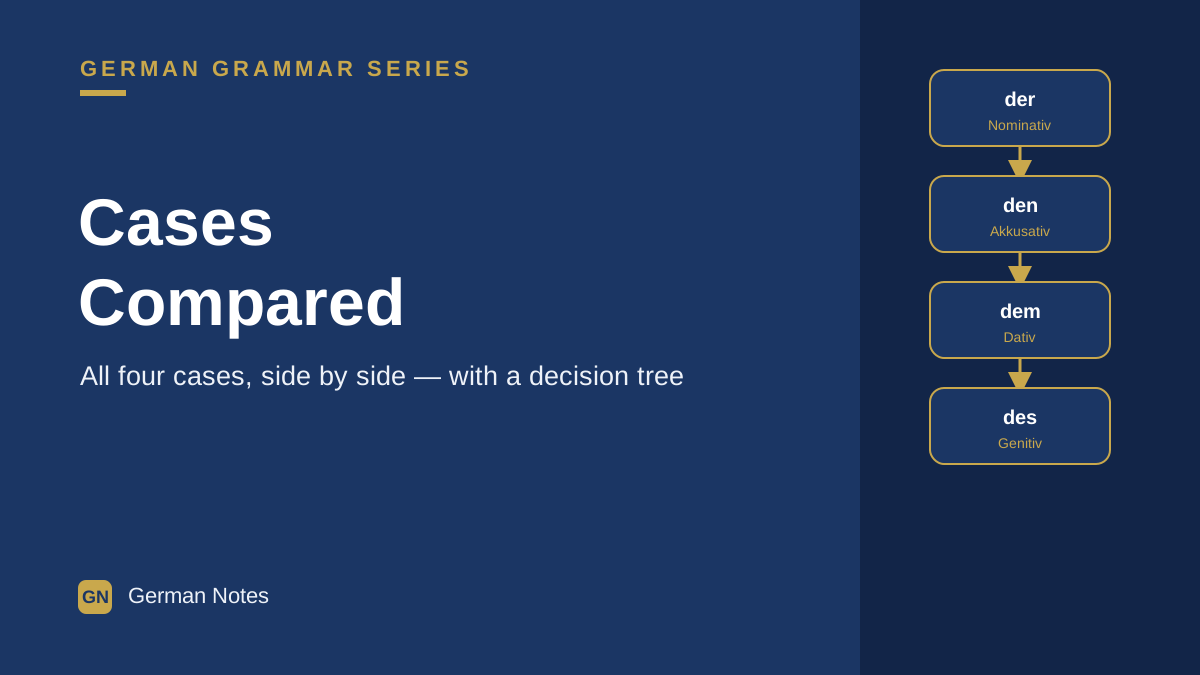
Once you've learned nominative, accusative, dative, and genitive one at a time, the next step is seeing them side by side — because in a real sentence, you have to pick the right one fast. This guide is the reference to come back to once the individual cases start to blur together.
The Four Cases at a Glance
| Case | Function | Question | Use | Example |
|---|---|---|---|---|
| Nominative | Subject | Wer/Was? | Doing the action | Der Mann schläft |
| Accusative | Direct Object | Wen/Was? | Receiving the action | Ich sehe den Mann |
| Dative | Indirect Object | Wem? | To/For whom | Ich gebe dem Mann ein Buch |
| Genitive | Possession | Wessen? | Belonging to | Das Buch des Mannes |
How Articles Change Across Cases
The same table, but organized by gender this time — highlighted cells mark where the article (or noun) changes from nominative:
Masculine (with Mann)
| Case | Article | Full Form | Adjective | Example |
|---|---|---|---|---|
| Nominative | der | der Mann | der große Mann | Der Mann schläft |
| Accusative | den | den Mann | den großen Mann | Ich sehe den Mann |
| Dative | dem | dem Mann | dem großen Mann | Ich helfe dem Mann |
| Genitive | des | des Mannes | des großen Mannes | Das Haus des Mannes |
Feminine (with Frau)
| Case | Article | Full Form | Adjective | Example |
|---|---|---|---|---|
| Nominative | die | die Frau | die große Frau | Die Frau schläft |
| Accusative | die | die Frau | die große Frau | Ich sehe die Frau |
| Dative | der | der Frau | der großen Frau | Ich helfe der Frau |
| Genitive | der | der Frau | der großen Frau | Das Haus der Frau |
Neuter (with Kind)
| Case | Article | Full Form | Adjective | Example |
|---|---|---|---|---|
| Nominative | das | das Kind | das große Kind | Das Kind schläft |
| Accusative | das | das Kind | das große Kind | Ich sehe das Kind |
| Dative | dem | dem Kind | dem großen Kind | Ich helfe dem Kind |
| Genitive | des | des Kindes | des großen Kindes | Das Haus des Kindes |
Plural (with Kinder)
| Case | Article | Full Form | Adjective | Example |
|---|---|---|---|---|
| Nominative | die | die Kinder | die großen Kinder | Die Kinder schlafen |
| Accusative | die | die Kinder | die großen Kinder | Ich sehe die Kinder |
| Dative | den | den Kindern | den großen Kindern | Ich helfe den Kindern |
| Genitive | der | der Kinder | der großen Kinder | Das Haus der Kinder |
Case Decision Tree: Which Case to Use?
Work through these four questions in order, for any noun in a German sentence:
NO → continue to Step 2
NO → continue to Step 3
NO → continue to Step 4
Practical Examples: All Four Cases Together
Example 1: Complete Sentence with All Cases
Der Lehrer erklärt den Schülern die neue Grammatik wegen der Prüfung.
(The teacher explains the new grammar to the students because of the exam.)
- der Lehrer = Nominative (who explains?)
- den Schülern = Dative (to whom does he explain?)
- die neue Grammatik = Accusative (what does he explain?)
- der Prüfung = Genitive (the preposition "wegen" requires genitive)
Example 2: Showing Possession
Das Zimmer des Mannes ist größer als das Zimmer der Frau.
(The man's room is bigger than the woman's room.)
- das Zimmer = Nominative (subject — what is bigger?)
- des Mannes = Genitive (possession — whose room?)
- der Frau = Genitive (possession — whose room?)
Example 3: Giving Something
Ich gebe meinem Bruder das Geschenk zum Geburtstag.
(I give my brother the gift for his birthday.)
- Ich = Nominative (who gives?)
- meinem Bruder = Dative (to whom do I give?)
- das Geschenk = Accusative (what do I give?)
- zum Geburtstag = Dative ("zu" + Geburtstag = dative)
What Changes vs. What Doesn't
Always Changes by Case
- Articles (der/die/das → different in every case)
- Adjectives (groß → große, großen, etc.)
- Demonstratives (dieser, jener, welcher)
- Possessives (mein, dein, sein → meinen, meinem, etc.)
- Some pronouns (er, sie, es → ihn, ihm, etc.)
Sometimes Changes
- Nouns — only masculine/neuter add -s/-es in genitive
- Plural nouns — nominative "die Kinder" vs. dative "den Kindern" (adds -n)
Never Changes
- Feminine nouns — "die Frau" stays the same form in all four cases
- der/das as an article form only appears in nominative (elsewhere they become den/dem/des or das stays only in nom./acc.)
Common Case Patterns in German
Pattern 1 — Simple Transitive Sentence
Nominative + Accusative: Subject (Nom) + Verb + Object (Acc)
- Der Mann sieht den Hund. (Nominative + Accusative)
- Ich lese das Buch. (Nominative + Accusative)
Pattern 2 — Giving/Showing/Telling
Nominative + Dative + Accusative: Subject (Nom) + Verb + Indirect Object (Dat) + Direct Object (Acc)
- Der Lehrer gibt dem Schüler ein Buch. (Nom + Dat + Acc)
- Ich zeige meiner Freundin das Foto. (Nom + Dat + Acc)
Pattern 3 — Possession
Genitive: Possessor (Gen) + Noun
- Das Auto des Mannes ist rot. (Genitive shows possession)
- Die Tür des Hauses ist grün. (Genitive shows possession)
Pattern 4 — Prepositions
Which case follows depends entirely on the preposition:
- Accusative prepositions: durch, für, gegen
- Dative prepositions: mit, nach, zu, bei
- Genitive prepositions: während, trotz, wegen
- Two-way prepositions: in, auf, über, unter (accusative or dative depending on motion vs. location)
Practice: Identify All Four Cases
Sentence: Der Lehrer gibt den Schülern ein neues Buch wegen der wichtigen Prüfung.
(The teacher gives the students a new book because of the important exam.)
- Der Lehrer = _____ (who gives?) — Answer: Nominative
- den Schülern = _____ (to whom?) — Answer: Dative
- ein neues Buch = _____ (what?) — Answer: Accusative
- der wichtigen Prüfung = _____ (which case does "wegen" require?) — Answer: Genitive
Case Mistakes: What Learners Get Wrong
Mistake 1: Not Changing the Article for Masculine Accusative
Wrong: Ich sehe der Mann.
Right: Ich sehe den Mann.
Mistake 2: Confusing Dative and Accusative
Wrong: Ich helfe den Freund.
Right: Ich helfe dem Freund.
Mistake 3: Forgetting Genitive Noun Endings
Wrong: Das Buch des Mann.
Right: Das Buch des Mannes.
Mistake 4: Not Using Dative with Certain Verbs
Wrong: Ich danke den Lehrer.
Right: Ich danke dem Lehrer.
Mistake 5: Wrong Case with Two-Way Prepositions
Wrong: Ich bin in den Wald (if you mean "I am in the forest").
Right: Ich bin im Wald (state = dative), or Ich gehe in den Wald (motion = accusative).
Quick Reference Table
| Need to... | Use... | Example |
|---|---|---|
| Name the subject | Nominative | Der Mann schläft |
| Name what's acted upon | Accusative | Ich sehe den Mann |
| Name who receives indirectly | Dative | Ich gebe dem Mann ein Buch |
| Show possession | Genitive | Das Haus des Mannes |
| Follow a preposition | Depends on preposition | mit (Dat), für (Acc), etc. |
Why Cases Matter
German cases let speakers clarify relationships between nouns without relying on word order the way English does. That's what makes the system flexible — you can say:
- Der Mann sieht die Frau. (The man sees the woman.)
- Die Frau sieht den Mann. (The woman sees the man.)
- But also: Den Mann sieht die Frau. — word order changes, meaning stays the same, because the accusative ending on "den Mann" already marks it as the object.
FAQ
Do I need to memorize all these article changes?
Not memorize — internalize through repetition. After seeing "den Mann" hundreds of times, it becomes automatic.
Which case is most important?
Nominative and accusative (subject and direct object) come up constantly. Dative and genitive follow naturally once those two are solid.
Can I speak German without knowing cases perfectly?
Yes, and people will understand you — but your speech will sound noticeably unnatural, since native speakers use cases automatically.
How long until cases become automatic?
Usually 3-6 months of consistent study and speaking practice for solid B1-level use.
Next Steps
Master each case individually:
- Nominative Case: The Subject
- Accusative Case: Direct Objects
- Dative Case: Indirect Objects
- Genitive Case: Possession
Or start from the full cases overview if you'd rather build up from the basics first. Then put it into practice with our A1 grammar lessons and grammar exercises.
Not sure where your German currently stands? Take our free placement test — about 20 minutes, and it tells you exactly which level to start from. Prefer to talk it through first? Book a free consultation to discuss your grammar goals, or go straight to enrolling in a live batch that fits your schedule.