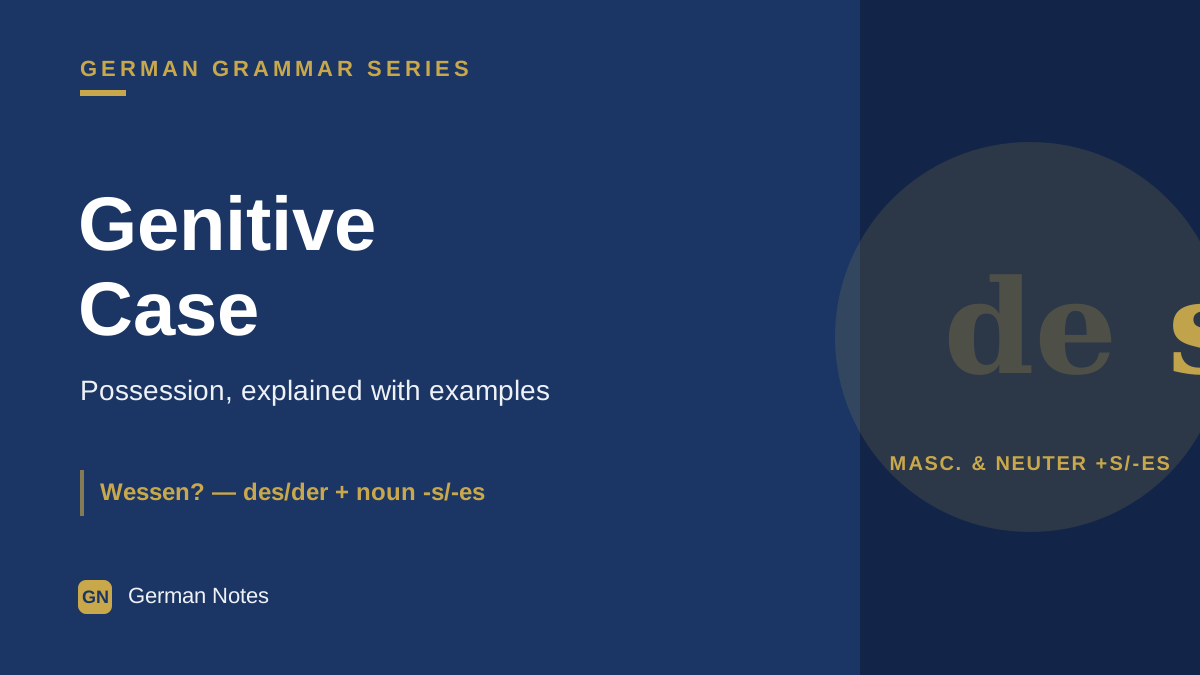
The genitive case shows possession or belonging — it answers "whose?" and translates as "of" in English. If you've worked through dative, genitive will feel familiar: every article changes again, but this time masculine and neuter nouns change too, picking up an -s or -es ending of their own.
Simple Definition
Genitive = Whose? / Of whom?
Das Buch des Mannes ist interessant. (The man's book is interesting.)
Question: "Wessen Buch?" (Whose book?) → Des Mannes = Genitive
Genitive Articles: Des, Der, Des, Der
The genitive articles change for all genders:
| Gender | Article | Example | Change from Nominative? |
|---|---|---|---|
| Masculine | des | des Mannes | YES (der → des) |
| Feminine | der | der Frau | YES (die → der) |
| Neuter | des | des Kindes | YES (das → des) |
| Plural | der | der Kinder | YES (die → der) |
Key point: All genitive articles change, and masculine/neuter nouns add -s or -es to the end.
Genitive Noun Endings
This is unique to genitive — the nouns themselves change too:
Masculine & Neuter Nouns
Add -s or -es to the end:
- Short nouns (1-2 syllables): usually add -es — der Mann → des Mannes, das Kind → des Kindes, der Platz → des Platzes
- Longer nouns: usually add -s — der Lehrer → des Lehrers, der Freund → des Freunds, das Haus → des Hauses
- Nouns ending in -s, -ss, -ß, -z, -tz, -x: add -es — der Fuss → des Fusses, das Glas → des Glases, der Platz → des Platzes
Feminine & Plural Nouns
No change to the noun itself:
- die Frau → der Frau (no -s added)
- die Frauen → der Frauen (no -s added)
- das Mädchen → des Mädchens (exception: some neuters take -s like a masculine noun)
How to Identify the Genitive Case
Ask yourself: "Whose is it? What does it belong to?" The answer is genitive.
Sentence: Das Haus des Lehrers ist groß.
Question: Wessen Haus? (Whose house?)
Answer: Des Lehrers = Genitive (possession)
Sentence: Die Farbe der Blume ist rot.
Question: Wessen Farbe? (Whose color?)
Answer: Der Blume = Genitive (possession)
Sentence: Der Anfang des Films ist spannend.
Question: Wessen Anfang? (Whose beginning?)
Answer: Des Films = Genitive (possession)
Common Genitive Expressions
| Expression | Meaning |
|---|---|
| das Haus des Mannes | the man's house |
| die Farbe der Rose | the rose's color |
| der Name des Kindes | the child's name |
| der Anfang des Jahres | the beginning of the year |
| das Ende der Welt | the end of the world |
| die Tür des Zimmers | the door of the room |
Genitive with Adjectives
When genitive is modified by an adjective, the ending is almost always -en:
| Gender + Article | Adjective Ending | Example |
|---|---|---|
| des + adjective | -en | des großen Mannes |
| der + adjective | -en | der großen Frau |
| des + adjective | -en | des großen Kindes |
| der (plural) + adjective | -en | der großen Kinder |
Genitive Prepositions
Some prepositions always take genitive (more formal):
- während (during) → während des Krieges
- trotz (despite) → trotz des Regens
- wegen (because of) → wegen der Krankheit
- statt (instead of) → statt des Autos
- außerhalb (outside) → außerhalb der Stadt
- innerhalb (within) → innerhalb der Woche
- diesseits (this side of) → diesseits der Grenze
- jenseits (beyond) → jenseits der Berge
Genitive Verbs (Less Common)
A few verbs take genitive — very formal, rarely used in modern spoken German:
- sich erinnern (to remember) → Ich erinnere mich des Tages (formal)
- gedenken (to commemorate) → Wir gedenken der Toten
- sich bedienen (to use) → Ich bediene mich dieser Methode (formal)
Modern German usually replaces these with accusative or other constructions.
Von Instead of Genitive (Spoken German)
In spoken German, people often use "von + dative" instead of genitive. It sounds more relaxed and less formal:
| Formal (Genitive) | Informal (Von + Dative) |
|---|---|
| Das Haus des Mannes | Das Haus von dem Mann |
| Das Buch der Lehrerin | Das Buch von der Lehrerin |
| Der Anfang des Films | Der Anfang vom Film |
Both are correct, but genitive is more formal and written; "von + dative" is more natural in conversation.
Genitive Practice Sentences
Identify the genitive in each sentence:
- Das Auto des Vaters ist alt. (The father's car is old.) — Genitive: des Vaters
- Trotz der Kälte gehen wir spazieren. (Despite the cold, we go for a walk.) — Genitive: der Kälte
- Der Name der neuen Lehrerin ist Petra. (The new teacher's name is Petra.) — Genitive: der neuen Lehrerin
- Das Ende des Buches ist überraschend. (The end of the book is surprising.) — Genitive: des Buches
- Wegen der Krankheit bin ich nicht in der Schule. (Because of the illness, I'm not in school.) — Genitive: der Krankheit
Common Mistakes with Genitive
Mistake 1: Forgetting the Noun Ending
Wrong: Das Buch des Mann. (missing -es ending)
Right: Das Buch des Mannes. (masculine nouns add -es/-s)
Mistake 2: Using Von Instead of Genitive in Formal Writing
Wrong: Das Buch von dem Mann. (too informal for a written report)
Right: Das Buch des Mannes. (formal/written)
Mistake 3: Not Changing the Article
Wrong: Das Buch die Frau.
Right: Das Buch der Frau. (feminine genitive article is "der")
Mistake 4: Overusing Genitive in Speech
Too formal for conversation: Das Haus des Mannes...
More natural in speech: Das Haus von dem Mann...
Summary Table: Genitive Case
| Aspect | Details |
|---|---|
| Function | Possession / of |
| Question | Wessen? (Whose?) |
| Masculine Article | des (+ noun -es/-s) |
| Feminine Article | der (no noun change) |
| Neuter Article | des (+ noun -es/-s) |
| Plural Article | der (no noun change) |
| Adjective Ending | -en (almost always) |
| Common Alternative | von + dative (informal) |
| Example | Das Buch des Mannes |
Practice Exercises
Fill in the correct genitive form:
- Das Haus _____ Lehrers ist groß. (The teacher's house is big.) — Answer: des
- Die Farbe _____ Rose ist rot. (The rose's color is red.) — Answer: der
- Der Anfang _____ Jahres ist kalt. (The beginning of the year is cold.) — Answer: des
- Wegen _____ Krankheit bleibe ich zu Hause. (Because of the illness, I stay at home.) — Answer: der
- Trotz _____ Regens spielen wir Fußball. (Despite the rain, we play football.) — Answer: des
Real-World Genitive
Genitive appears in writing, titles, and formal speech:
- Die Werke Goethes. (Goethe's works.)
- Das Ende des Romans. (The end of the novel.)
- Der Anfang der Geschichte. (The beginning of the story.)
- Trotz der Schwierigkeiten. (Despite the difficulties.)
FAQ
Is genitive used in spoken German?
Less than in formal writing. Germans often use "von + dative" in speech (e.g., "Das Auto von dem Mann" instead of "Das Auto des Mannes").
Why do masculine/neuter nouns add -s/-es?
Historical reasons — genitive needs a noun marker that feminine/plural nouns don't require, because their articles already mark genitive clearly.
Do all nouns add -s in genitive?
Only masculine and neuter singular nouns. Feminine and plural nouns don't change.
Is "von + dative" wrong?
No — it's just more informal/spoken. Genitive is more formal and written.
Related Grammar
Genitive makes the most sense once you can compare it against the other cases — see our nominative case guide, accusative case guide, dative case guide, and the full German cases overview. Ready to put it into practice? Our A1 grammar lessons and grammar exercises both cover case practice directly.
Not sure where your German currently stands? Take our free placement test — about 20 minutes, and it tells you exactly which level to start from. Prefer to talk it through first? Book a free consultation to discuss your grammar goals, or go straight to enrolling in a live batch that fits your schedule.