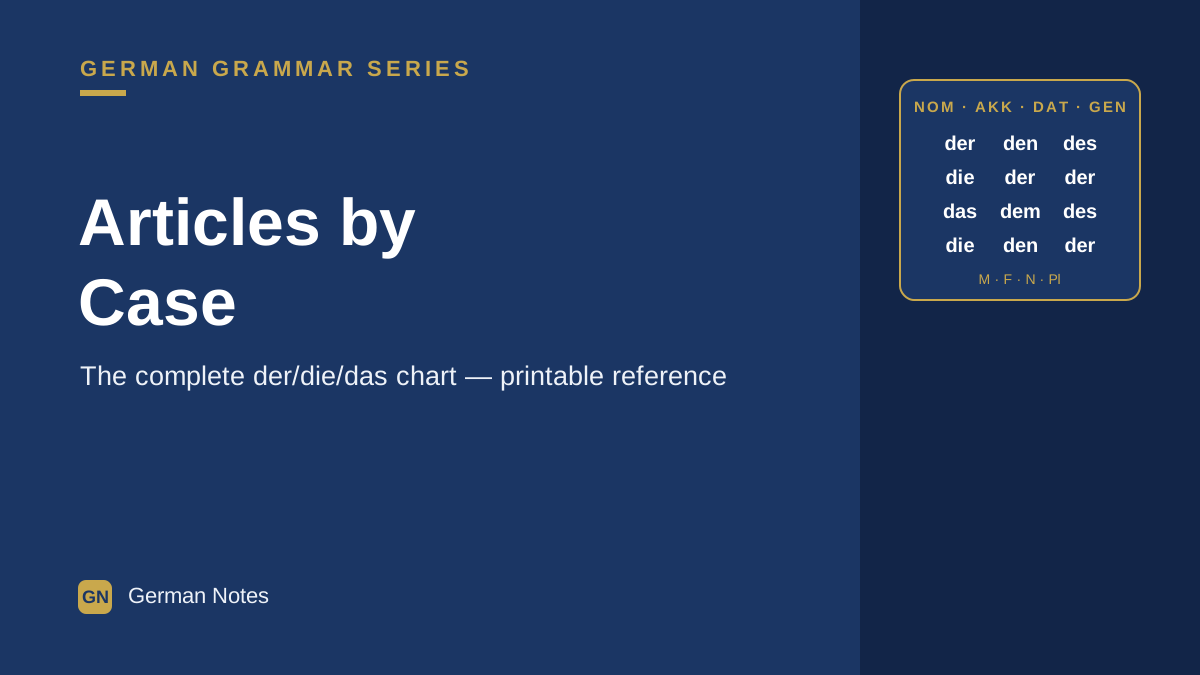
This is the article — der, die, das — reference chart to bookmark. If you already know what each case does (see our case comparison guide if not), this page is purely the lookup: which article goes with which gender, in which case.
Complete German Article Chart
Masculine (der Mann)
| Case | Article | With Noun | Example Sentence |
|---|---|---|---|
| Nominative | der | der Mann | Der Mann schläft. |
| Accusative | den | den Mann | Ich sehe den Mann. |
| Dative | dem | dem Mann | Ich helfe dem Mann. |
| Genitive | des | des Mannes | Das Haus des Mannes |
Feminine (die Frau)
| Case | Article | With Noun | Example Sentence |
|---|---|---|---|
| Nominative | die | die Frau | Die Frau arbeitet. |
| Accusative | die | die Frau | Ich sehe die Frau. |
| Dative | der | der Frau | Ich helfe der Frau. |
| Genitive | der | der Frau | Das Haus der Frau |
Neuter (das Kind)
| Case | Article | With Noun | Example Sentence |
|---|---|---|---|
| Nominative | das | das Kind | Das Kind schläft. |
| Accusative | das | das Kind | Ich sehe das Kind. |
| Dative | dem | dem Kind | Ich helfe dem Kind. |
| Genitive | des | des Kindes | Das Haus des Kindes |
Plural (die Kinder)
| Case | Article | With Noun | Example Sentence |
|---|---|---|---|
| Nominative | die | die Kinder | Die Kinder spielen. |
| Accusative | die | die Kinder | Ich sehe die Kinder. |
| Dative | den | den Kindern | Ich helfe den Kindern. |
| Genitive | der | der Kinder | Das Haus der Kinder |
Master Chart: All Cases & Genders
| Gender | Nominative | Accusative | Dative | Genitive |
|---|---|---|---|---|
| M | der | den | dem | des |
| F | die | die | der | der |
| N | das | das | dem | des |
| Pl | die | die | den | der |
Highlighted articles = changed from nominative.
Which Cases Are Hardest?
Easiest (Fewest Changes)
- Nominative: base form (der, die, das)
- Accusative: only masculine changes (der → den)
Moderate (More Changes)
- Dative: all four articles change (dem, der, dem, den)
- Genitive: all four articles change, plus nouns add -s/-es
Why Articles Change
Articles change to help listeners and readers identify:
- Which noun is the subject (nominative)
- Which noun is the direct object (accusative)
- Which noun is the indirect object (dative)
- Which noun shows possession (genitive)
Example: "Der Mann sieht den Hund" vs. "Der Hund sieht den Mann" — different nouns land in the accusative slot each time. Word order could change, but the articles keep the meaning clear.
Quick Pattern Recognition
Pattern 1: Masculine Changes Most
Nominative der → Accusative den → Dative dem → Genitive des
Masculine is the only gender with a different article in every single case.
Pattern 2: Feminine Dative & Genitive Are the Same
Dative der Frau = Genitive der Frau — feminine uses "der" for both. Confusing on its own, but context (a preposition, or a possession structure) always clarifies which one it is.
Pattern 3: Dative Always Has -m or -n
- Masculine & neuter dative: dem
- Feminine dative: der
- Plural dative: den (+ noun -n)
Pattern 4: Genitive Requires -s/-es on Masculine/Neuter Nouns
Nominative der Mann → Genitive des Mannes (noun adds -es)
Nominative das Kind → Genitive des Kindes (noun adds -es)
Nominative das Haus → Genitive des Hauses (noun adds -es)
Practice: Identify the Correct Article
Fill in the correct German article:
- Ich sehe _____ Lehrer. (I see the teacher — masculine, accusative) — Answer: den
- Ich helfe _____ Lehrerin. (I help the teacher — feminine, dative) — Answer: der
- Das Haus _____ Familie ist groß. (The house of the family — plural, genitive) — Answer: der
- _____ Kind spielt im Park. (The child plays in the park — neuter, nominative) — Answer: das
- Ich gebe _____ Kind ein Buch. (I give the child a book — neuter, dative) — Answer: dem
- Trotz _____ Regens spielen wir. (Despite the rain — neuter, genitive) — Answer: des
- _____ Männer arbeiten hart. (The men work hard — masculine plural, nominative) — Answer: die
- Ich sehe _____ Frauen. (I see the women — feminine plural, accusative) — Answer: die
Noun Endings by Case
Masculine & Neuter: Add -s or -es in Genitive
Short nouns add -es — der Mann → des Mannes, das Kind → des Kindes
Longer nouns add -s — der Lehrer → des Lehrers, das Haus → des Hauses
Feminine & Plural: No Change to Nouns Themselves
die Frau → der Frau (genitive) · die Kinder → den Kindern (dative — but see the exception below)
Exception: plural nouns need -n or -en in dative:
- Nominative: die Kinder → Dative: den Kindern
- Nominative: die Frauen → Dative: den Frauen
Real-World Examples
- Nominative: der Mann, die Frau, das Kind (subjects)
- Accusative: Ich sehe den Mann, die Frau, das Kind (objects)
- Dative: Ich helfe dem Mann, der Frau, dem Kind (to whom)
- Genitive: das Haus des Mannes, der Frau, des Kindes (possession)
- Plural: die Kinder spielen (nom.) · ich sehe die Kinder (akk.) · ich helfe den Kindern (dat.) · das Haus der Kinder (gen.)
Printable Reference Card
| Nominative | Accusative | Dative | Genitive |
|---|---|---|---|
| der | den | dem | des |
| die | die | der | der |
| das | das | dem | des |
| die | die | den | der |
Summary
| Fact | Why It Matters |
|---|---|
| Only masculine changes in accusative | Most common mistake for beginners |
| All articles change in dative & genitive | Confusing without a chart to check against |
| Feminine uses "der" for dative & genitive | Easy to mix up the two meanings |
| Plural dative needs -n on the noun | Often forgotten even at intermediate level |
| Masculine & neuter add -s/-es in genitive | Article AND noun both change |
FAQ
Do I need to memorize this whole chart?
No — practice with real sentences instead. The chart becomes second nature after weeks of regular use.
Why do feminine dative and genitive use the same article (der)?
Historical reasons — German reduced its case-marking forms over time. Context (a preposition, or a possession structure) almost always makes it clear which one you're looking at.
Can I use a different word order to avoid using cases?
No. German word order is flexible precisely because the cases carry the meaning — get the cases wrong and flexible word order stops helping you.
Which article changes the most?
Masculine — it takes four different forms (der, den, dem, des), one for every case.
Related Grammar
This chart is the article-only companion to our full case guides: nominative, accusative, dative, and genitive — or see them all side by side. Ready to practice? Our A1 grammar lessons and grammar exercises both cover article and case drills directly.
Not sure where your German currently stands? Take our free placement test — about 20 minutes, and it tells you exactly which level to start from. Prefer to talk it through first? Book a free consultation to discuss your grammar goals, or go straight to enrolling in a live batch that fits your schedule.