A1 Grammar · Unit 5 · Topic 10 of 30

Sentence Structure: The Verb Is Always in Position 2

About 3 minutes · tables, common mistakes and practice with answers

In short

In a German sentence, the conjugated verb always goes in position 2. The first position can be the subject, a time word, or a place. The verb follows right after.

Where the verb goes

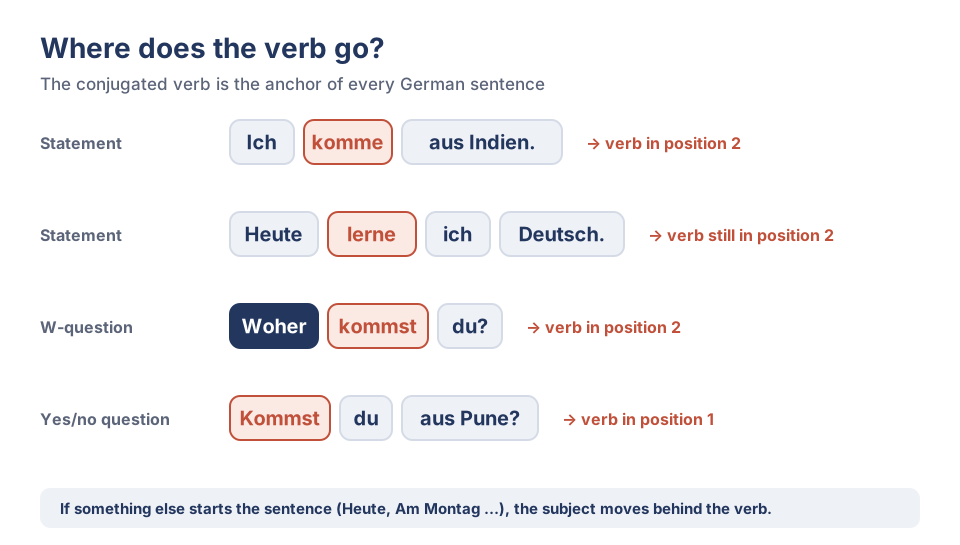
Verb position in German statements and questions

Swipe the picture sideways to see all of it →

Find the conjugated verb first. In statements and W-questions it sits in position 2. If you start with something other than the subject, such as Heute or Am Montag, the subject moves behind the verb. Yes/no questions start with the verb.

हिंदी में समझें

पहले conjugated verb ढूँढिए। सामान्य वाक्य और W-सवाल में यह दूसरे नंबर पर रहता है। अगर वाक्य Heute या Am Montag से शुरू हो, तो subject verb के बाद आ जाता है। हाँ/ना वाले सवाल verb से शुरू होते हैं।

In a German sentence, the conjugated verb always goes in position 2. Position 2 means the second slot, not the second word. "Mein Name" is one slot.

Position 1 can be the subject, a time word, or a place. Whatever comes first, the verb stays second.

Position 1Position 2Rest
IchbinGeeta.
Mein NameistRam Sharma.
Heutelerneich Deutsch.
Am NachmittagspieltMohan Cricket.

Common Mistakes in Sentence Structure: The Verb Is Always in Position 2

Don't count words. "Am Nachmittag" is one slot. And don't move the verb to the end. In a main clause, it stays second.

Memory trick

The verb is the king in the second chair. Anything can sit in the first chair, but the king never moves.

Practice

Start with the underlined word.

  1. Ich gehe morgen ins Kino. (Morgen ...)
  2. Wir trinken am Abend Tee. (Am Abend ...)
Show answers

Answers: Morgen gehe ich ins Kino. / Am Abend trinken wir Tee.

Want to practice this out loud with a teacher?

All topicsNext lesson →

Get our experts to answer your questions within 24 Hrs

Chat with us
Free Placement TestBook Free Demo