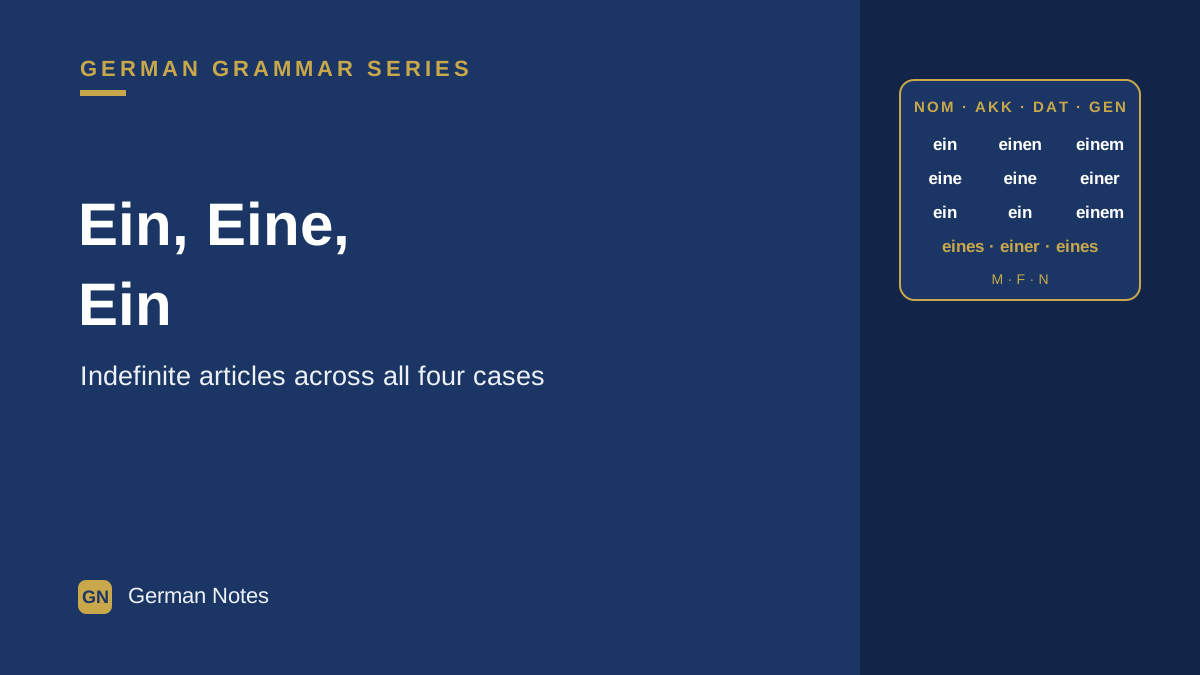
Indefinite articles are "a" or "an" in English — ein, eine, ein in German. They work exactly like der, die, das, but you use them for something mentioned for the first time, or something non-specific.
Der Mann arbeitet. (The man works — specific)
Ein Mann arbeitet. (A man works — not specific)
Complete Ein/Eine/Ein Chart by Case
Masculine (ein Mann)
| Case | Article | With Noun | Example | English |
|---|---|---|---|---|
| Nominative | ein | ein Mann | Ein Mann schläft | A man sleeps |
| Accusative | einen | einen Mann | Ich sehe einen Mann | I see a man |
| Dative | einem | einem Mann | Ich helfe einem Mann | I help a man |
| Genitive | eines | eines Mannes | Das Haus eines Mannes | A man's house |
Feminine (eine Frau)
| Case | Article | With Noun | Example | English |
|---|---|---|---|---|
| Nominative | eine | eine Frau | Eine Frau arbeitet | A woman works |
| Accusative | eine | eine Frau | Ich sehe eine Frau | I see a woman |
| Dative | einer | einer Frau | Ich helfe einer Frau | I help a woman |
| Genitive | einer | einer Frau | Das Haus einer Frau | A woman's house |
Neuter (ein Kind)
| Case | Article | With Noun | Example | English |
|---|---|---|---|---|
| Nominative | ein | ein Kind | Ein Kind schläft | A child sleeps |
| Accusative | ein | ein Kind | Ich sehe ein Kind | I see a child |
| Dative | einem | einem Kind | Ich helfe einem Kind | I help a child |
| Genitive | eines | eines Kindes | Das Haus eines Kindes | A child's house |
Master Pattern: Ein/Eine/Ein Endings
| Gender | Nominative | Accusative | Dative | Genitive |
|---|---|---|---|---|
| M | ein | einen | einem | eines |
| F | eine | eine | einer | einer |
| N | ein | ein | einem | eines |
Key insight: ein follows the same pattern as der/die/das — the only difference is that ein's nominative and masculine/neuter accusative forms don't carry a visible case ending the way der/das do.
How Ein Differs from Der
| Aspect | Der/Die/Das | Ein/Eine/Ein |
|---|---|---|
| Used for | Specific things | Things first mentioned |
| Example | Der Mann (the specific man) | Ein Mann (a man, any man) |
| Nominative | der, die, das | ein, eine, ein |
| Accusative | den, die, das | einen, eine, ein |
| Plural | Has an article (die) | No article (—) |
Der Mann schläft. (The man — I know which one.)
Ein Mann schläft. (A man — I don't know which one.)
Ein in Different Contexts
Nominative (Subject)
- Ein Student lernt Deutsch. (A student learns German.)
- Eine Lehrerin unterrichtet. (A teacher teaches.)
- Ein Kind spielt. (A child plays.)
Accusative (Direct Object)
- Ich sehe einen Hund. (I see a dog.)
- Wir kennen eine gute Freundin. (We know a good friend.)
- Er kauft ein neues Auto. (He buys a new car.)
Dative (Indirect Object)
- Ich helfe einem Freund. (I help a friend.)
- Sie gibt einer Schülerin ein Buch. (She gives a student a book.)
- Wir danken einem Lehrer. (We thank a teacher.)
Genitive (Possession)
- Das Haus eines Mannes ist groß. (A man's house is big.)
- Die Farbe einer Rose ist rot. (A rose's color is red.)
- Der Name eines Kindes ist Maria. (A child's name is Maria.)
Ein with Adjectives
When an adjective follows ein, its ending matches ein's own pattern:
| Case | Ein + Adjective | Example |
|---|---|---|
| Nominative | ein großer | ein großer Mann |
| Accusative | einen großen | einen großen Mann |
| Dative | einem großen | einem großen Mann |
| Genitive | eines großen | eines großen Mannes |
Full examples:
- Ein großer Mann schläft. (A big man sleeps.)
- Ich sehe einen großen Mann. (I see a big man.)
- Ich helfe einem großen Mann. (I help a big man.)
- Das Haus eines großen Mannes. (A big man's house.)
See our full adjective endings guide for how these endings work with every article type.
Common Mistakes with Ein
Mistake 1: Forgetting to Change Ein in Accusative
Wrong: Ich sehe ein Mann. (using nominative)
Right: Ich sehe einen Mann. (using accusative)
Only masculine changes in accusative — same as der → den.
Mistake 2: Confusing Eine and Einer
Wrong: Ich helfe eine Frau. (using nominative)
Right: Ich helfe einer Frau. (using dative)
Feminine dative is "einer," not "eine."
Mistake 3: Assuming Ein Works in Plural
Wrong: Ein Kinder spielen. (ein has no plural)
Right: Kinder spielen. (plural has no article) — or: Die Kinder spielen.
Mistake 4: Not Changing the Adjective Ending
Wrong: Ich sehe ein große Kind.
Right: Ich sehe ein großes Kind. (neuter nominative/accusative)
Ein vs. Article + Adjective
Sometimes you don't use ein at all — when the adjective is predicative, after the verb:
With ein (attributive): Das ist ein großes Haus. (This is a big house — article with noun)
Without ein (predicative): Das Haus ist groß. (The house is big — adjective alone)
Rule: use ein when the adjective directly modifies the noun. Don't use it when the adjective comes after the verb.
Practice Exercises
Fill in the correct ein/eine/ein form:
- Das ist _____ Auto. (nominative neuter) — Answer: ein
- Ich sehe _____ Frau. (I see a woman — accusative feminine) — Answer: eine
- Ich helfe _____ Freund. (I help a friend — dative masculine) — Answer: einem
- Das Haus _____ Lehrers ist schön. (A teacher's house is beautiful — genitive masculine) — Answer: eines
- Sie kauft _____ neue Kleid. (She buys a new dress — accusative neuter) — Answer: ein
- Wir danken _____ nette Frau. (We thank a nice woman — dative feminine) — Answer: einer
- Ein _____ Arzt ist in der Praxis. (A German doctor is in the office — adjective ending, nominative masculine) — Answer: deutscher
- Ich spreche mit _____ interessanten Mann. (I speak with an interesting man — dative masculine) — Answer: einem
Ein in Real-World German
- Ich bin ein Student. (I am a student.)
- Das ist eine gute Idee. (That is a good idea.)
- Wir brauchen einen neuen Computer. (We need a new computer.)
- Sie spricht mit einem Freund. (She speaks with a friend.)
- Das ist das Haus eines Kollegen. (That is a colleague's house.)
Quick Reference Table
| Need | Use | Example |
|---|---|---|
| Masculine subject | ein | Ein Mann schläft |
| Masculine object | einen | Ich sehe einen Mann |
| Masculine indirect object | einem | Ich helfe einem Mann |
| Masculine possession | eines | Das Haus eines Mannes |
| Feminine subject | eine | Eine Frau arbeitet |
| Feminine object | eine | Ich sehe eine Frau |
| Feminine indirect object | einer | Ich helfe einer Frau |
| Feminine possession | einer | Das Haus einer Frau |
| Neuter subject | ein | Ein Kind spielt |
| Neuter object | ein | Ich sehe ein Kind |
| Neuter indirect object | einem | Ich helfe einem Kind |
| Neuter possession | eines | Das Haus eines Kindes |
Summary: Ein Follows the Same Pattern as Der
Just like der/die/das changes by case, so does ein/eine/ein:
- Nominative: ein (base form, like der/die/das)
- Accusative: einen for masculine (like den) — others stay the same
- Dative: a different form for every gender (like dem/der/dem)
- Genitive: a different form for every gender (like des/der/des)
Once you've mastered der/die/das across the cases, ein/eine/ein becomes automatic.
FAQ
Do I need to memorize ein/eine endings?
Not memorize — internalize through repetition. After using them hundreds of times, they become automatic.
Is ein the only indefinite article?
Yes. German has one indefinite article family (ein/eine/ein), covering both English "a" and "an."
Why does ein exist if der/die/das already marks case?
Ein is for things mentioned for the first time or non-specific; der/die/das is for things already known or specific.
What's the plural of ein?
Ein has no plural form. Use no article ("Kinder spielen") or the definite article ("Die Kinder spielen").
Do adjectives always follow ein's endings?
Yes — adjectives after ein change to match its case and gender: ein großer Mann, einen großen Mann, and so on.
Related Grammar
Ein/eine/ein makes the most sense right after you've learned der/die/das by case and how the four cases compare — see our case comparison guide, or go case by case with nominative, accusative, dative, and genitive. Adjective endings after ein are covered in full in our adjective endings guide.
Not sure where your German currently stands? Take our free placement test — about 20 minutes, and it tells you exactly which level to start from. Prefer to talk it through first? Book a free consultation to discuss your grammar goals, or go straight to enrolling in a live batch that fits your schedule.